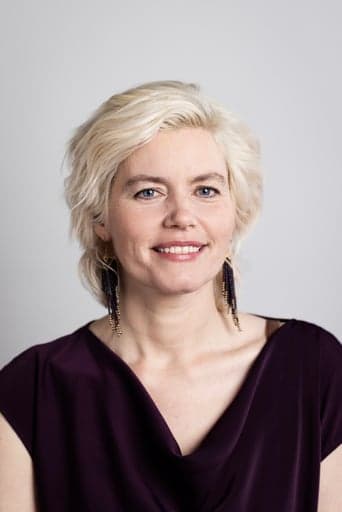
Pamela Fox
Principal Cloud Advocate
Microsoft
@pamelafoxPrincipal Cloud Advocate at Microsoft focused on Python and Azure; previously worked in developer advocacy/engineering roles at Google, Coursera, and Khan Academy, and taught computer science at UC Berkeley.
Sessions (6)
In this hands-on lab, you will build a production-ready AI application using Microsoft Foundry, with no fine-tuning or deep machine learning expertise required. You will discover and select models, provision a Foundry project, and connect to a hosted model using the OpenAI SDK. You’ll implement a comment moderation workflow, compare model outputs, and package the solution as a hosted agent using Python, ready for real-world integration.
Frontier labs are releasing new models constantly, and it is hard to know when “better” is better enough to justify touching a working system. On top of that, “just swap the model” often turns into real work because providers expose different APIs and different expectations around tools and structured outputs. The model swap workshop is a hands-on bake-off across frontier LLMs. We will run the same scenarios using multiple models (OpenAI, Anthropic, Kimi, and more) and compare results side by side for agentic tool use, structured outputs, and multimodal tasks. Swapping models is not just changing a model name. In this workshop, you will actually do the swaps, including moving between OpenAI-style Responses APIs and Anthropic-style Messages APIs, then see what breaks and what needs to change in your prompts, tool definitions, and JSON strategies. We will finish by running a small eval suite so you can quantify tradeoffs instead of relying on vibes. We will provide the Microsoft Foundry environment for access to the models, no account needed. Speakers: Pamela Fox — Microsoft; Arun Sekhar — Microsoft.
Modern agents fail in ways traditional monitoring can’t catch. In this hands-on lab, learn how Microsoft Foundry Observability helps you move from prototype → production with context-specific evaluation suites (auto-generated evaluators + test datasets) wired into developer workflows via skills/MCP tooling for hosted agents. Then scale quality with continuous evaluation, trace-linked analysis, and adaptive red teaming—and walk away with a sandbox to explore additional features on your own.
Copilot isn't just for writing code. Learn how to use it across CLI and cloud workflows to scaffold apps, debug faster, and automate repetitive steps across your entire dev lifecycle.
OpenAI SDK, Anthropic SDK, or an LLM-agnostic agent framework. Which one should your next AI app be built on? Starting with Foundry Models, we walk through each option in code, show what you gain and what you give up at every layer, and help you pick the right abstraction for your scenario without overbuilding. Speakers: Arun Sekhar — Microsoft; Pamela Fox — Microsoft.
Agent behavior changes in production. Learn common failure modes and how to debug, test, and improve performance using real evaluation techniques.