AI Engineer WF 2026
ScheduleSpeakers
Sign In
Sign In
Speakers/Andrew Orobator
Andrew Orobator

Andrew Orobator

Reddit

@aorobator

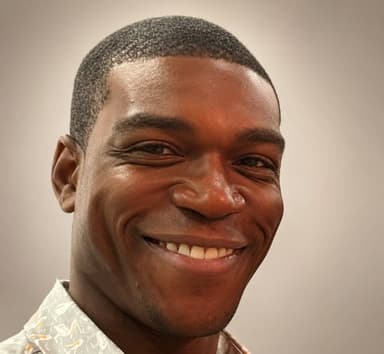
Andrew Orobator is a senior Android engineer at Reddit and the author of the Vibe Engineering series, a ten-part methodology for AI-assisted software development covering personas, reusable skills, worklogs, agent workflows, and self-driving codebases. He co-authored the series with Claude using the same practices it describes, treating AI not as a autocomplete layer but as a collaborative engineering system with memory, process, and taste. Andrew has spent over a decade building Android products at scale, with experience across consumer apps, developer tooling, and mobile architecture. His current work explores how AI agents can move from ad hoc prompting into durable engineering infrastructure: systems that preserve context, improve through feedback loops, and help teams ship better software with less coordination drag. At AI Engineer World’s Fair, he brings a practitioner’s view of what it takes to make AI-assisted development feel less magical, more reliable, and actually useful.

Sessions (1)

Spin at the Gate Until Green: The Engineering Primitives Behind Self-Driving Codebases
1:30 PM·Leadership 1 · Room 3016

Most AI-assisted development fails the same way: the AI produces plausible output, the human can't tell if it's right, so they check manually, find the problem, re-prompt, and repeat. This loop doesn't scale. There's a different approach. If you can express correctness as a binary — does it compile, do the tests pass, does the lint check clear — you can remove the human from that loop entirely. The AI submits. The gate checks. If red, it adjusts and resubmits. Spin at the gate until green. This talk covers the engineering primitives that make this possible: personas (consistent behavior at the agent level), skills (composable, reusable prompt modules), worklogs (accountability across sessions), postmortems (turning failures into constraints), and spec-driven development (making the target explicit enough for a machine to hit it). The culmination is a flag lifecycle agent — triggered by a cron job, cleaning up stale feature flags, verified by compile + test + lint, no human in the loop. Not hypothetical. Working prototype, proven in practice. I co-authored a ten-part series on this methodology with Claude. The series was built using the workflow described in this talk. If you don't trust the theory, the fact that this talk exists is the proof.

Software Factoriesintermediatetalk